Five classes.
One drop.
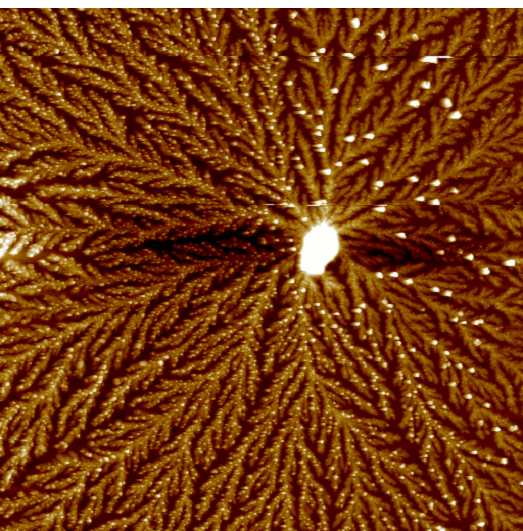
When a tear dries on glass, it forms branching crystal patterns. Those patterns change with the body's chemistry. Our model learns to distinguish five classes from a single AFM scan.
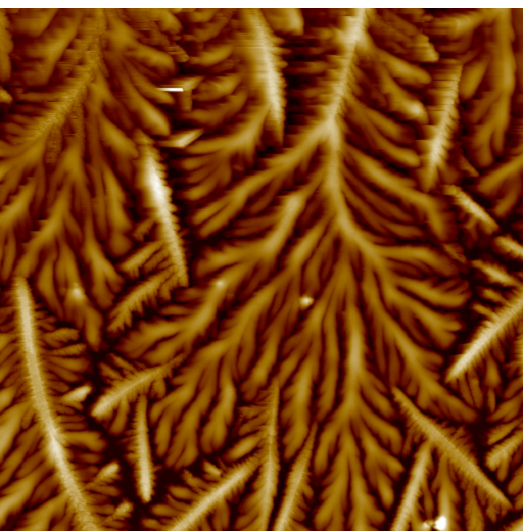
baseline
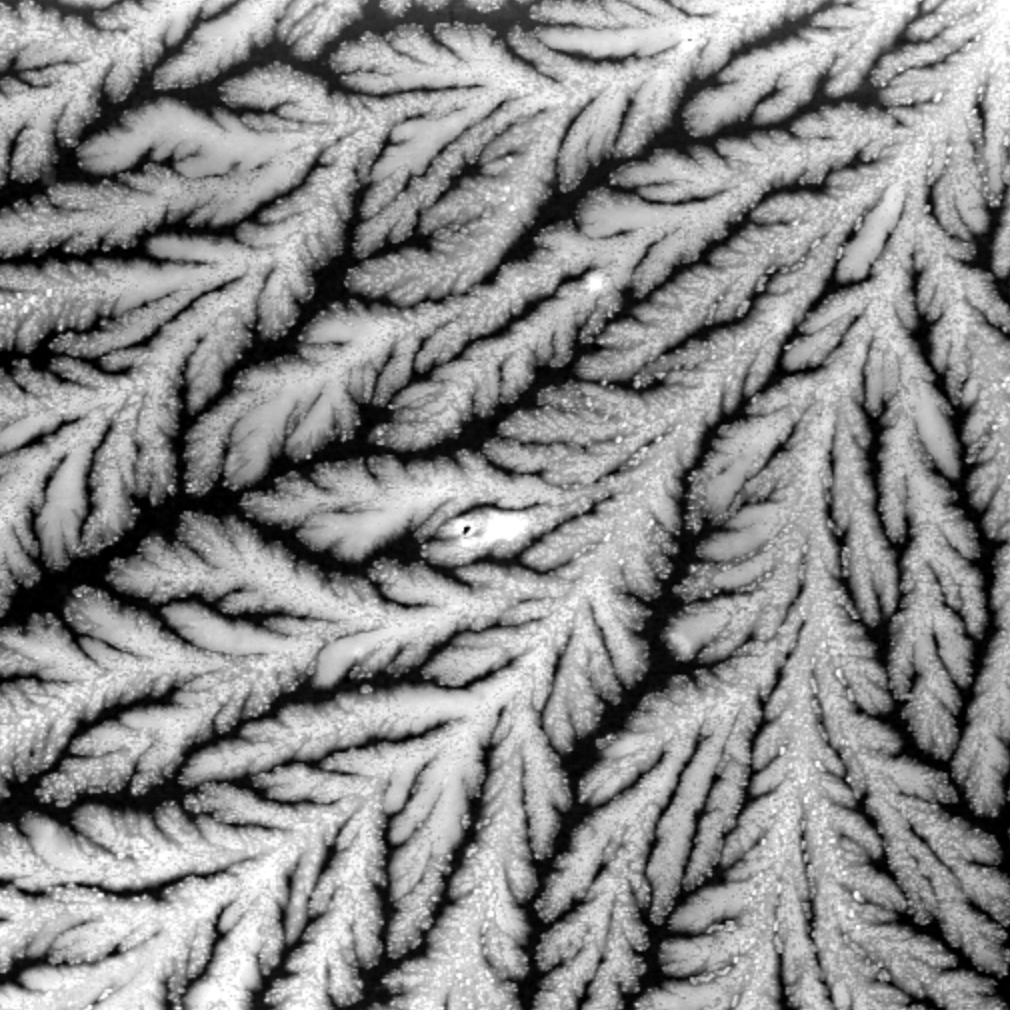
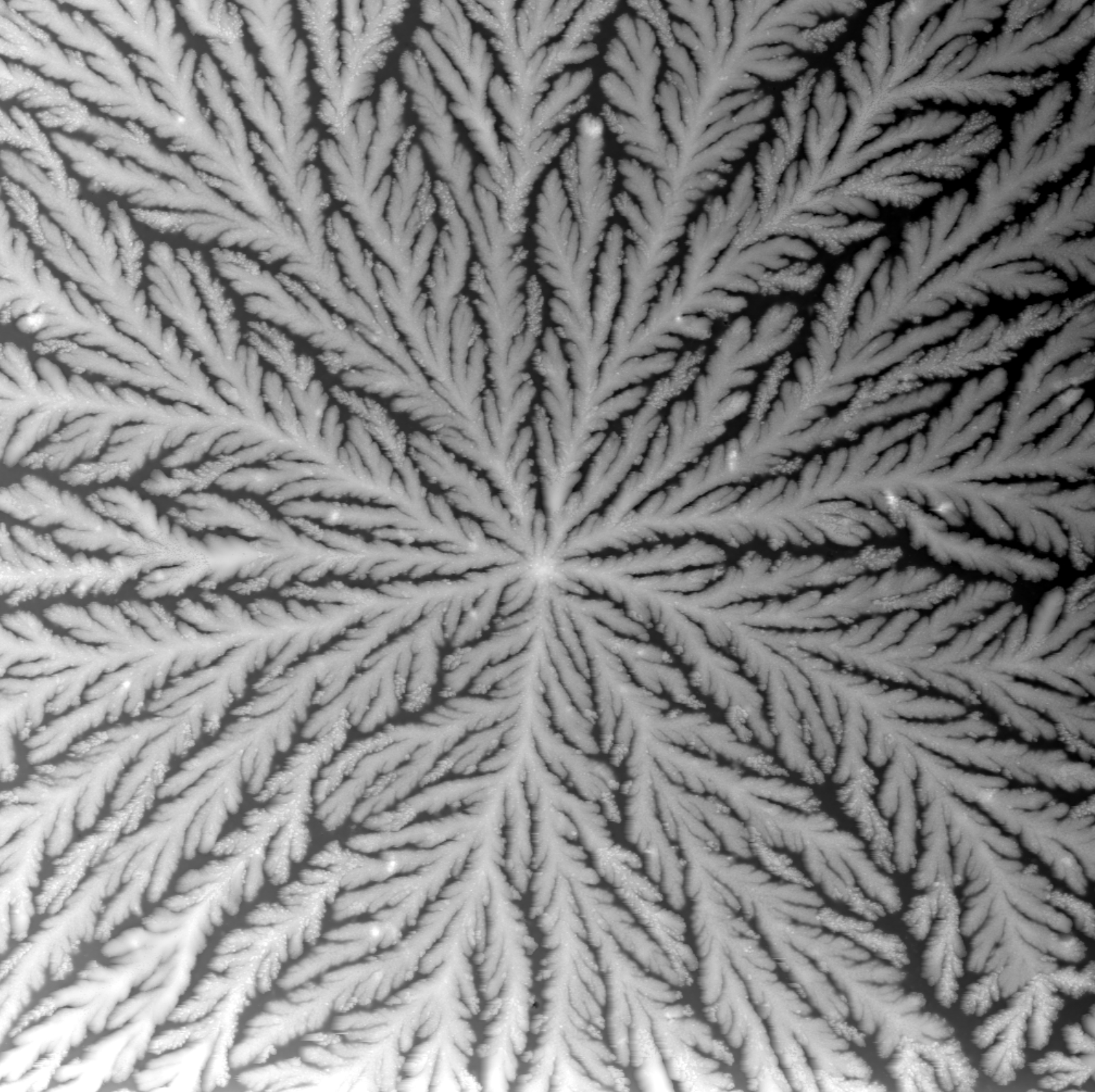
Even branching, soft radial symmetry, clean edges.
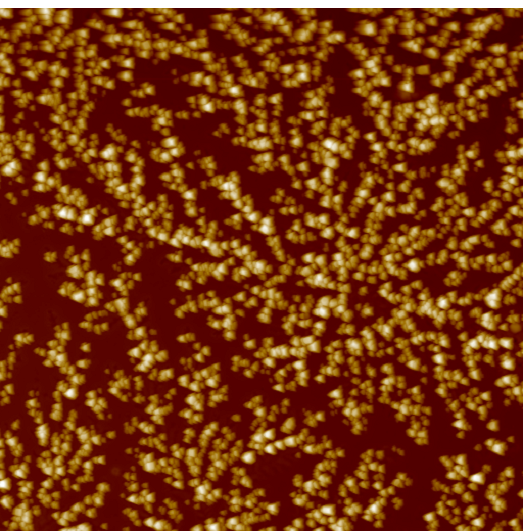
mellitus
Dense dendritic cores, thickened primary branches.
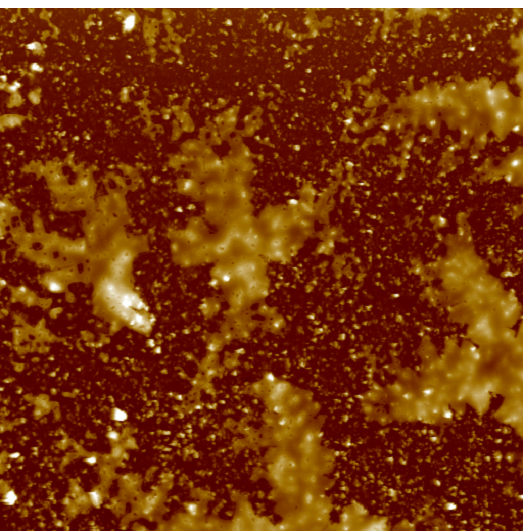
ocular pressure
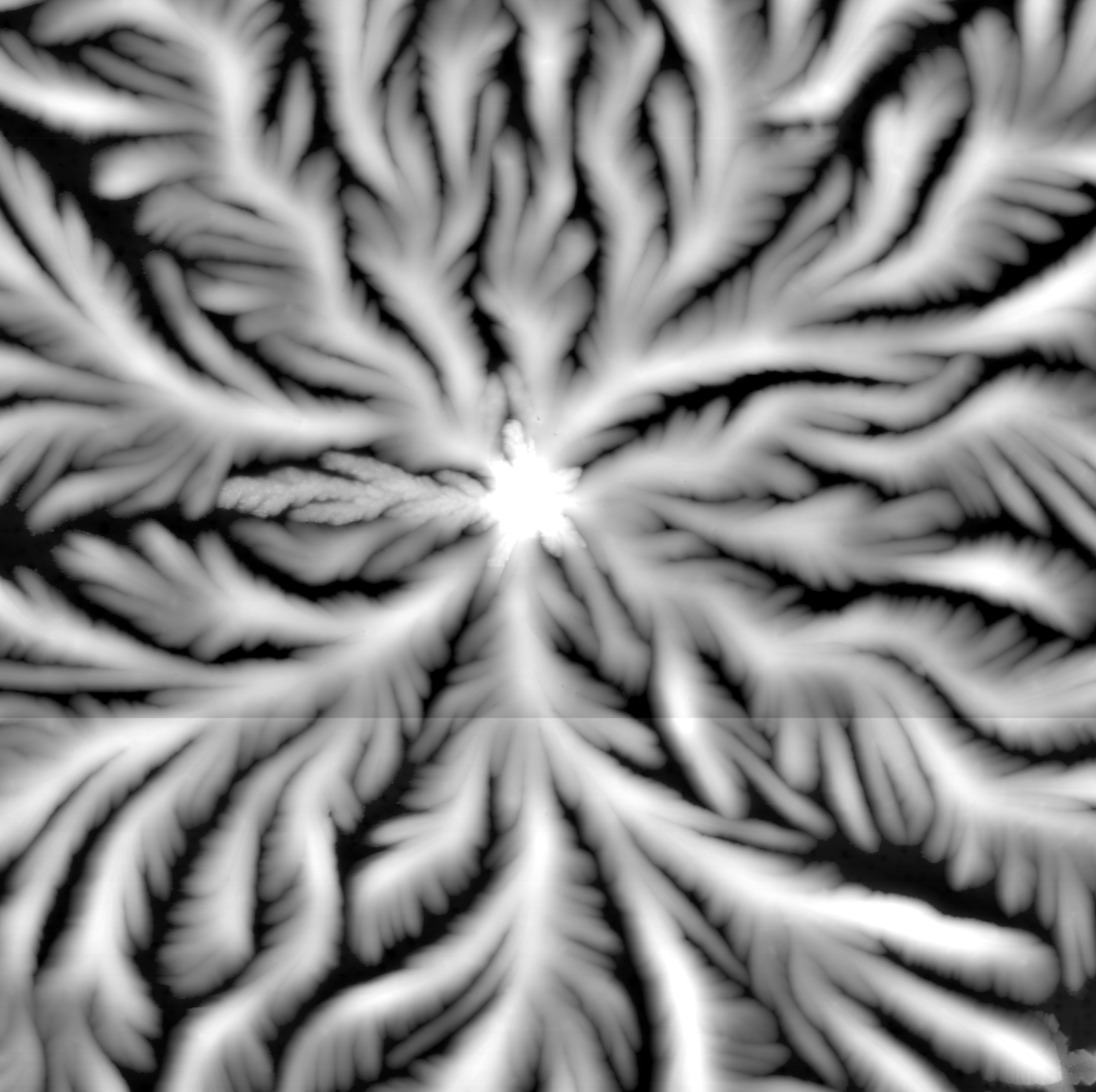
Sparse fibrillar lines, broken secondary branching.
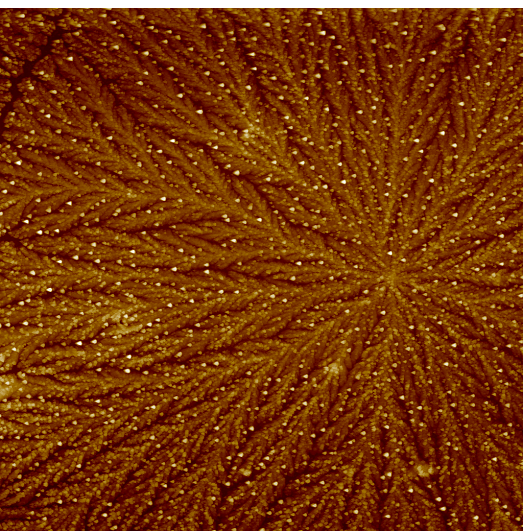
sclerosis
Disrupted symmetry, irregular crystalline islands.
syndrome
Shortened ferns, coarse lipid aggregates, low coverage.
Model
21M parameters, ImageNet-pretrained, fine-tuned at 384 × 384. AdamW with a cosine schedule, MixUp and CutMix, class-weighted loss for the 7:1 imbalance between MS and dry eye.
Evaluation
Patient-stratified 80/20 split — 189 scans from 33 patients for training, 51 scans from 9 unseen patients held out. No patient appears on both sides.
Pipeline
A fixed 523 × 531 crop removes the scale bar. Each scan is re-rendered through viridis, plasma, inferno, magma, cividis and grayscale to decouple color from topography.
What the model actually does.
Performance falls as the question gets finer. Sick-or-healthy is almost solved; naming one disease out of five is still hard. We report the honest numbers, not the flattering ones.
-
Binary94.1%f1-macro
Healthy vs. disease. Clear margin, stable across folds.
-
Three-class82.4%f1-macro
Healthy · autoimmune · metabolic. The useful clinical split.
-
Five-class64.7%f1-macro
Full diagnosis from a single tear. Where the frontier is.
All numbers are f1-macro on a patient-stratified split — no patient appears on both sides of training and evaluation. One drop, one story, one honest score.